
Does Your Café, Gym or Taxi Firm Need an App at All?
Thinking about building an app for your café, gym, or taxi firm? You're not alone. It feels like every business owner is being told they need one, and if your competitors have an app, the pressure is real. But here's the thing: jumping into mobile app development just because everyone else is doing it can be a costly mistake.
This post is here to help you figure out if your business actually needs an app, or if a simple mobile site and a booking link will do the job just fine.
We'll walk you through a plain English breakdown of apps versus mobile sites, why the "everyone else has one" argument falls flat, and then give you three simple tests to run: repeat frequency, notification value, and offline need. We'll also look at which local trades typically pass these tests and what a good mobile site actually gets you. By the end, you'll have a clear answer on whether to build, or just stick with what works.
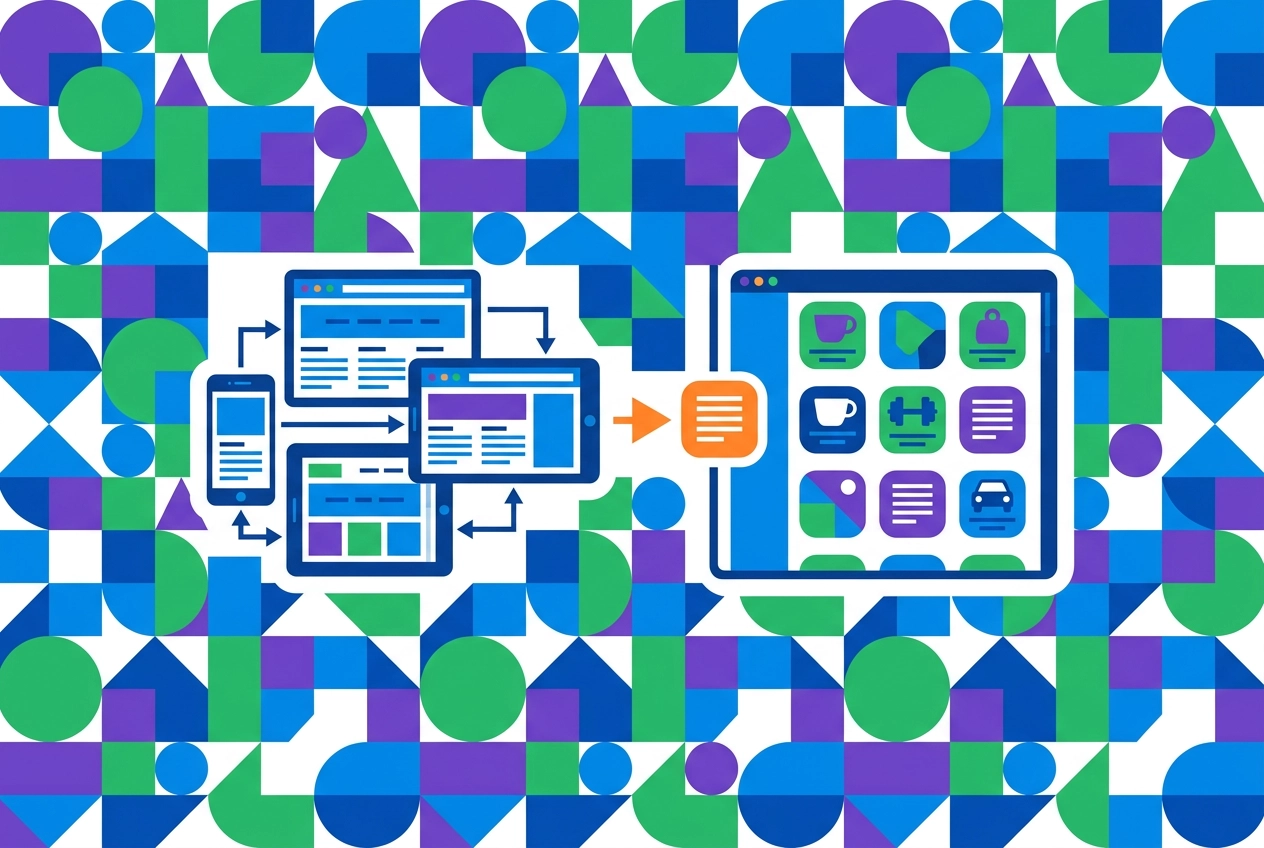
First, the Plain English Bit: App, Mobile Site or Web App?
Before you decide anything, let's get the words straight. No jargon, no glossary.
Native app: something a customer downloads from the App Store or Google Play. It sits on their home screen, can ping them a push notification, and can partly work without a signal.
Mobile site: your normal website on a phone. People reach it from a search result, a text link or a QR code on the counter. No download, no approval process.
Web app: a site that acts a bit like an app once it is open. It can be saved to the home screen, updates itself and skips the app stores. Notification support varies by device and browser.
Why care? A native app is the stronger option for pushing a message to someone's lock screen. And the app store route adds a download step; our read is that the friction loses people before they see your menu or timetable.
One rule for the rest of this piece: if a technical phrase needs explaining twice, it gets cut. You run a café or gym, not a product team. You should not need a glossary to make this call.
Why "Our Competitors Have One" Is a Bad Reason to Build
So now you know what each option is, here's the bit that matters more than any of them: why you're asking in the first place. Almost every owner who comes to us has the same trigger. A nearby business launched an app, or an agency email landed promising growth. Neither is a reason on its own.
An app is not a badge. It's a delivery channel, like a newsletter or a phone line. It only works if you feed it something people actually want.
And the cost doesn't stop at the build. Someone has to keep it working on new phone versions (see what the CMA app store commitments mean for your venue app), update the content, answer the messages it generates and decide what to do when a feature stops being useful. There's a hidden attention cost too. A dead app with three unread notifications and a stale menu makes a small business look worse than having no app at all.
The better opening question is behavioural, not technical: can you name one action your customers repeat often enough that giving them a shortcut is worth the trouble? That question is exactly what the three tests below are built to answer.
Test 1: Repeat Frequency. Can You Name a Weekly Action?
Right. The first test is repeat frequency: how often does the same customer take the same action? Weekly or more is a strong signal, monthly is weak, and once a year is not a repeat habit at all.
Real weekly actions look like a gym member booking three classes a week, a taxi account customer booking a Friday airport run, or a regular ordering the same coffee at 7:40am every morning. Ask yourself honestly: could you name a decent number of customers who would open the app most weeks? If that list is short or you're guessing, the repeat appetite isn't there yet, and no amount of good design will create it.
Then run the shortcut test. Does the app genuinely save a step compared with a saved phone contact, a website bookmarked to the home screen, or a quick tap in a booking tool? If it's the same number of taps, you haven't found a reason to commission mobile app development.
And if the action is annual or seasonal, appointment reminders and texts do the job better and cheaper. Dentists, boiler services and MOT reminders live happily outside an app.
Test 2: Notification Value. Is There a Message Worth Interrupting Someone For?
Now the second test, and this is the one that settles most app questions we see. Push notifications are the one trick a native mobile app pulls that a mobile site cannot match, so be honest about what you would actually send.
Good pings: a class is cancelled, your driver is two minutes away, food is ready, your table is free earlier than booked, physio has moved and needs confirming. Bad ones: general newsletters, this week's opening hours, anything a text already covers, and any "20% off this weekend" message sent every Friday until people mute you.
A useful frame: would you be glad to get this on your own phone at that moment? If not, it is not a notification, it is an advert with a buzzer attached. In our experience, people switch notifications off quickly and rarely switch them back. Build for one genuinely useful ping a week rather than ten, and keep it short enough to read on a lock screen.
Next up: the offline question.
Test 3: Offline Need. Does the Job Break When the Signal Drops?
So you've decided whether you have a message worth sending. Last test: offline need. Does the job break when the signal drops?
For most local businesses, the honest answer is no. Wi-Fi and mobile data are the default assumption, and a well-built website works whether the customer is on 4G on the bus or your own network in the corner.
Genuine offline cases do exist: taxi dispatch and job logging in rural or patchy areas, gym check-in in a basement studio with thick walls, and delivery drivers or cleaners recording jobs where the signal comes and goes. If coverage is the worry, rural 4G is the weakest, not town centre signal.
Ask the blunt question: does the job stop working with no signal? If it carries on fine, offline is a nice-to-have and a mobile site will cover it. Offline support adds weight to the build and the ongoing maintenance, so it should be the last thing you add, not the first selling point you hear.
One more honesty check: even an offline-capable app still needs a server round trip for bookings, payments and anything that has to hold a record. Offline is rarely as total as it sounds.
The Verdict: Reading Your Three Answers Together
The verdict is simply the sum of those three answers. Here is how it plays out.
Pass all three: an app earns its keep. A repeat action, a message worth sending and a genuine offline need is the combination that justifies commissioning mobile app development.
Pass repeat frequency and notification value, fail offline: you have a choice. A native app is usually the stronger pick if push notifications are the point. A web app works if you would rather avoid the app stores.
Pass repeat frequency only: build the mobile site properly and add a booking link, a tap-to-call button and a save-to-home-screen prompt. That is the answer for most single-venue businesses. If you are weighing up booking tools, our guide to choosing an online booking system walks through the options.
Fail repeat frequency: do not build an app, however good the quote looks. Put the money into the website, your search visibility and a nicely filled out Google Business profile instead.
Pass nothing: your priority is the basics. Accurate opening hours, a phone number that is easy to tap, a clear booking link and directions that work on a phone. Revisit the app question in a year, once you can see the repeat pattern in your own bookings.
Which Local Trades Usually Pass These Tests
Once you've read your three answers together, the next question is where your trade usually lands. Here's our market read.
Gyms and studios are the strongest fit. Members come back weekly for timetables, class bookings, check-ins and renewal reminders, and that's a rhythm an app can genuinely speed up.
Taxi and private hire firms qualify too, but only where the custom is account-based: saved home and work addresses, driver tracking, card details stored once, booking in two taps. A firm running mostly street hails is a different case entirely.
Cafés are the interesting one. A weekly coffee habit looks like a repeat action, but the step saved is tiny, so a mobile site with a loyalty QR code on the counter usually does the job.
Pubs and restaurants: a booking link plus a clear events page covers most of it. An app starts paying off once you run regular quiz nights or a loyalty scheme worth checking back for.
Hairdressers work on a six-week rebooking cycle, and physios run longer treatment plans. Reminders and simple self-service booking often do the work people assume needs an app.
These patterns are our read of the market, not research findings, so treat them as a starting point.
What a Good Mobile Site and Booking Link Actually Gets You
For the trades that don't pass all three tests, a mobile site isn't a consolation prize. It's the channel that puts you in front of people: a well-built site can be found via search, linked from social, scanned from a QR code and opened by anyone, with no download step between the customer and your opening hours.
The booking link does the real work. Put one obvious button straight to your booking tool, next to a tap-to-call number and a WhatsApp or text option if you use one. Changes go live the same day, so a price update, new class or Christmas opening time is a five-minute job rather than an app store submission.
Where it loses: no lock screen notifications, a weaker reason to come back on its own, and less presence unless the customer saves it to their home screen. Build it properly or you waste the advantage: large buttons, hours and location above the fold, pages that load on a patchy connection, and one clear action per screen rather than five competing ones. That's often a better spend than mobile app development you can't justify yet.
Straight Answers to the Questions Owners Ask Next
So, what else do owners ask before signing anything?
Can't I just use a mobile site? For a single venue, yes, usually. It's the default answer unless you passed all three tests, and plenty of businesses that did pass still start here.
What about a web app instead of a native app? As we said earlier, a web app skips the app stores and updates itself. But notification support differs by device and browser, so it's weak when push messages are the whole point.
Do I need to be on the app stores? Only if you want downloads, store discovery and push notifications. Otherwise it's extra cost, extra review time and another thing to maintain.
How much does a mobile app cost? Costs vary with scope, features and who keeps it running. No honest supplier gives a single number before asking questions. A quote with no questions is a warning sign.
How will I know it's working? Pick one measure before you build, like repeat bookings, class check-ins or orders placed through the app. Review it after three months, not a year.
Which leaves the obvious question: what do you actually do with your three answers?
Run the Tests, Then Decide
So before you ring anyone, grab a notebook and write three answers down: how often the action repeats, what you would actually notify people about, and whether the job has to work without signal.
Pass all three? Then a proper conversation about mobile app development is worth your time. Pass one or two? Put the money into a mobile site, a booking link and better search visibility first, because that is where the return sits. Those three work as one job anyway, as we argue in why small business web design and SEO are one job in the UK.
If you need a mobile site, a booking link, a web app or a native mobile app, Satsuma Media builds them for UK small businesses.
Then diarise the question for next year. Habits move, and today's no can quietly become a yes.
Conclusion
The takeaway is refreshingly simple: don't build an app just because everyone else has one. Put your three answers to the test; if they don't point to an app, your money works harder elsewhere. The goal isn't to tick a box, it's to put your investment where it actually delivers.
So grab that notebook and run the three tests before you ring anyone. Satsuma Media builds mobile sites, booking links, web apps and native apps for UK small businesses and can help you weigh the answers up.